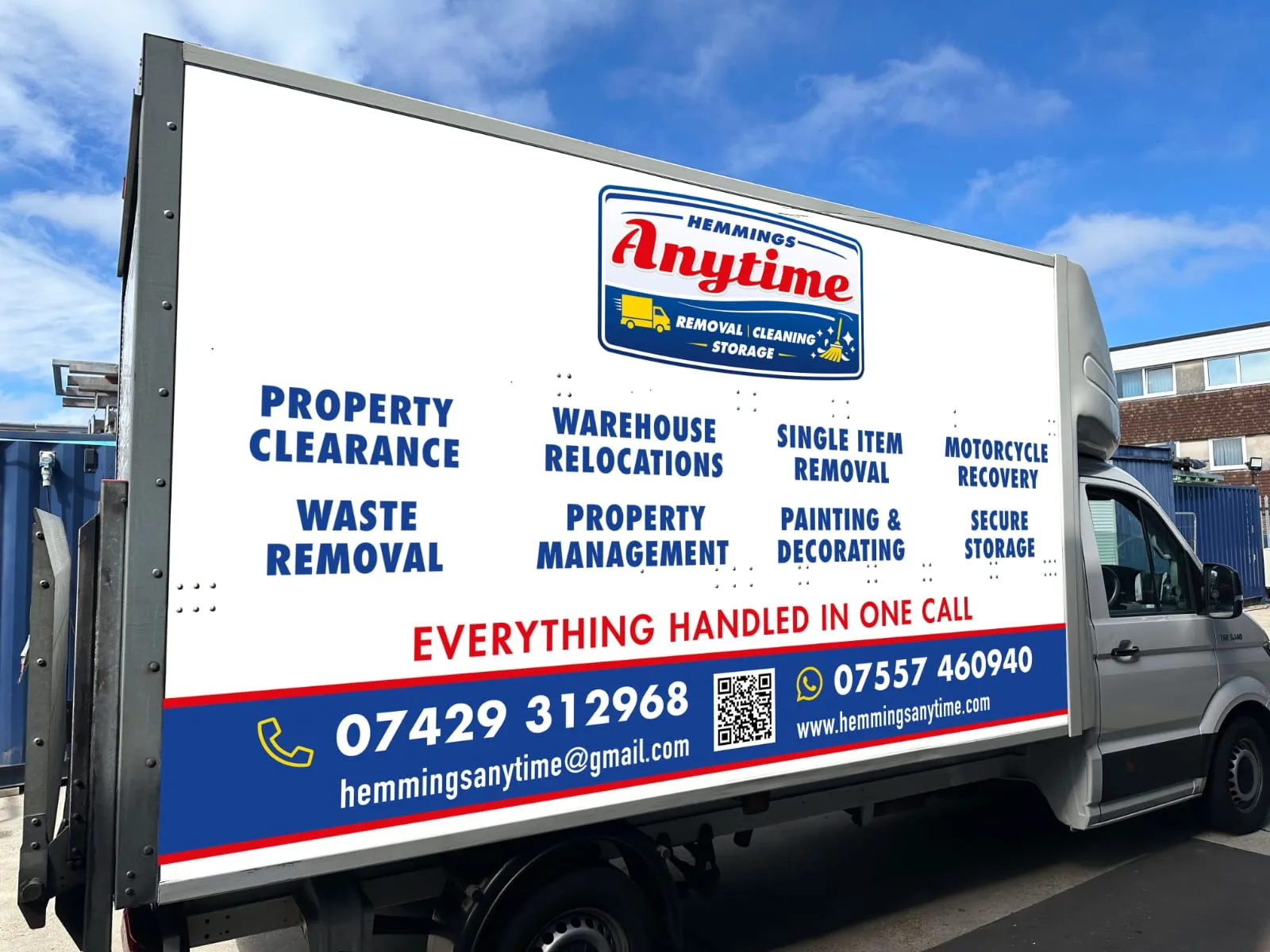
Garage Clearance in Hove: agree the right scope
Hemmings Anytime offers garage clearance enquiries for Hove. The starting point is to clear specified garage contents, with the garage inventory and retained equipment explained before arrangements are confirmed. A garage clearance can involve belongings accumulated over several years, with useful equipment mixed beside unwanted contents. Identify keep areas before describing the removal list. Shelving may hold containers which are not suitable for an ordinary mixed collection, so inspect what you can safely identify and disclose anything uncertain. The enquiry should distinguish freestanding contents from fixtures which belong to the building. A clear account of the job helps establish suitability, access and the work to be agreed. Provide the address and preferred date, but keep any unconfirmed timing or handover information clearly identified. The practical plan should describe your property, rather than assume that every address in the town has the same access or collection conditions.
For this service, the inventory might include stored furniture, boxes, unwanted shelving and separately identified tools or containers. That is an enquiry example, not an automatic acceptance list or a promise that every item can be handled in every condition. Record the objects or materials you actually have, including anything outside the main room. Where you need to clear specified garage contents, distinguish the essential work from optional requests so the discussion can focus on the outcome you need. A photograph helps show scale, but explain closed containers and any part of the job which is not visible. Ask what additional information would be useful before committing to a collection or receiving arrangement.
Build a useful garage clearance inventory
Prepare the Hove enquiry around the garage inventory and retained equipment. Use a written list which another person can understand and compare it with the items at the property. Give quantities and approximate dimensions for bulky objects, and identify anything unusually heavy, unstable or difficult to reach. The examples of stored furniture, boxes, unwanted shelving and separately identified tools or containers illustrate why a single label such as a small job does not establish the handling requirements. If the list changes while you are deciding what to do, keep the updated version and share it before arrangements are finalised. Separately mark anything whose ownership or destination has not been decided.
The inventory has two purposes: it supports the initial quotation discussion and gives the attending contact a way to identify the agreed work. In a a garage being reorganised so retained tools and household storage can be used again, the order in which groups are handled can matter just as much as the total amount. Explain the current position of each group, whether it will be ready together, and whether another person is collecting retained belongings. Avoid counting only the items nearest the entrance. Include cupboards, storage corners or outside areas where relevant, while clearly stating which areas remain outside the agreed scope. Useful preparation makes the request easier to assess without turning an estimate into an unsupported promise.
Prepare for a structured garage-content clearance
For a Hove booking, preparation should match the service rather than a generic collection checklist. Make a simple zone plan for tools, retained belongings and proposed collection groups. Check that the garage door opens and describe any separate side access. Leave unidentified containers, batteries, liquids or sharp items apart for discussion. Do not climb unstable shelving or disturb unfamiliar material to produce a more complete photograph. Take the time to identify the entrance, item groups and attending contact before the proposed date. If you cannot complete one of the preparations safely or do not know whether it is appropriate, explain that in the enquiry. The purpose is to agree a workable plan, not to move difficult items yourself or conceal an awkward part of the job. Keep preparations which depend on another person's permission separate from tasks you can complete independently.
Review the list again when your preferred date is approaching. Confirm that the items described still match what is present, and report additions, removals or changes in condition. Where the work involves stored furniture, boxes, unwanted shelving and separately identified tools or containers, details such as loose components or unmarked contents can be missed during an early conversation. Record these before collection rather than relying on a last-minute explanation. Place the relevant keys and contact information somewhere accessible. Do not block exits while gathering items, and leave retained belongings clearly identified. If a room must remain in use, explain that boundary so preparation does not disrupt occupants unnecessarily.
Hove context and address-specific access
Hove is covered by the city parking suspension information. The linked primary source provides local context; it does not show the access arrangements at your particular address. For garage clearance, use that distinction when planning the garage inventory and retained equipment. A local street name or district description cannot confirm the width of a doorway, the availability of a private loading area or the condition of a path. Describe your actual apartment entrance and identify lift availability where it matters to the enquiry. The location information should help you ask the right questions, while the collection plan remains based on facts about the property you are using.
Consider the following hypothetical example in Hove: an apartment collection with a booked lift and a separate delivery address. If that resembles your circumstances, explain how stored furniture, boxes, unwanted shelving and separately identified tools or containers would reach the agreed collection or receiving point, and identify anything needing a different route. This is an illustrative planning example, not a claim about a job completed by Hemmings Anytime or the design of every local property. Ask the owner, occupier or building manager about private access arrangements. Record who can give permission, who will open the entrance and what changes would affect the plan. An address-specific discussion is more useful than assuming a standard procedure simply because the job is in Hove.
Loading, parking and contact arrangements in Hove
Check the actual proposed stopping place for this garage clearance enquiry. Brighton & Hove and East Sussex publish parking information relevant to their respective areas; consult the linked current guidance rather than relying on an old fee, deadline or remembered rule. Brighton & Hove is recorded as the local area context, but permissions for a private apartment entrance must still be discussed with the person responsible for it. Do not assume that street arrangements automatically permit the use of a driveway, shared passage or managed building entrance. Tell Hemmings Anytime how far the agreed items are from the likely vehicle position and whether the route includes steps or a locked gate.
Keep a named contact available for lift availability and other access questions. For the example of an apartment collection with a booked lift and a separate delivery address, one missing key or an unconfirmed permission can alter the route even though the inventory itself is unchanged. Establish how the team can reach the attending person, and give that person the latest list rather than an earlier photograph. If the proposed loading position changes, disclose the revised carrying distance before work begins. Do not place objects on the pavement or in a shared entrance simply to make collection seem easier. The arrangements should leave access usable for other people and reflect the permissions actually obtained.
How to arrange garage clearance step by step
The practical sequence for Hove is to define keep and clear zones; identify contents and uncertainties; confirm door and driveway access; agree the collection scope; check retained items remain. Start the conversation with the information you already know, then identify decisions which depend on another person or an uncertain date. Once the scope has been discussed, check that everyone involved is referring to the same items and the same property access. This is especially important in a garage being reorganised so retained tools and household storage can be used again, where an inventory alone may not describe the order of work. Record the collection address, any receiving address, the preferred timing and the contact who can authorise the agreed work. Ask how changes should be communicated if the plan develops.
Before treating an arrangement as confirmed, review the garage inventory and retained equipment alongside lift availability. A request can be suitable in principle but still require details about the entrance or the condition of particular objects. Keep your enquiry specific enough to resolve those questions without assuming a fixed crew size, vehicle specification or response time. On the day, identify the agreed groups and make the attending person aware of anything which must stay. Check the outcome against your list afterwards and raise a query if something differs from the agreed scope. Clear communication at each stage is more helpful than leaving practical decisions until items are already being handled.
Choose the right service and disclose additional needs
Contents clearance is different from dismantling a building, removing fixed electrical installations or handling unidentified substances. Ask about each requirement explicitly. Valuable tools, paperwork and items owned by another person should be settled before collection. For Hove, bring these distinctions into the first enquiry so the business can assess the actual request. Explain if a structured garage-content clearance is part of a larger project, and list the other tasks without assuming they all belong to one booking. For example, a property change can involve transport, retained storage and unwanted-material collection, while each group needs its own instructions. A single phone conversation can help describe the combined requirements, but the work still needs a clear scope. Avoid treating a service label as confirmation of any special equipment, professional advice or installation work.
When comparing providers for garage clearance, give each the same description of the garage inventory and retained equipment. Include the same stored furniture, boxes, unwanted shelving and separately identified tools or containers groups, access information and preferred date, or the resulting discussions may concern different jobs. Ask what is included, what preparation is expected and how a change to the load or route should be handled. Do not compare an estimate for items beside an open door with an estimate involving another room or a longer carry. The details of lift availability can make a practical difference. Keep the agreed information in writing where possible and make sure the attending contact can refer to it without guessing.
Request your Hove garage clearance quote
Contact Hemmings Anytime with the Hove address, a summary of the garage inventory and retained equipment, the items or materials involved and a preferred date. Include photographs if they help explain stored furniture, boxes, unwanted shelving and separately identified tools or containers, but add a written description for anything hidden or uncertain. Mention lift availability, the apartment entrance and the likely stopping place so the discussion can address the complete job. Use the existing quote form, phone number or WhatsApp contact shown on this page. Availability and suitability should be discussed directly before you make arrangements with another keyholder, seller, tenant or receiving person.
After that discussion, check the confirmed scope against your own inventory. Keep separate records for a structured garage-content clearance and any additional task which has not yet been agreed. If an enquiry extends towards Brighton, provide the exact second address and explain what is needed there rather than assuming that a nearby location establishes travel time or acceptance. Recheck current council information where street arrangements matter and confirm private permissions independently. Make the collection or receiving route understandable to the attending contact, with retained items clearly identified. A complete briefing gives this garage clearance request a practical foundation while keeping the next steps specific to the job you actually need.
Material information for your Hove enquiry
For this garage clearance request, state whether the unwanted contents come from a household or a business activity. Explain the actual materials instead of assuming that mixed bags are a single category. Keep electrical objects and unidentified containers apart for discussion, and disclose damage or exposure to weather where it affects condition. The official household-waste guidance is linked below so you can check the relevant collector information and responsibilities. This page does not independently certify a carrier or promise a particular disposal destination. Ask Hemmings Anytime what details apply to the collection you are proposing, and keep the agreed information with your job records.
Read our garage clearance service guide before discussing your Hove enquiry.